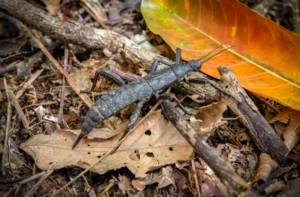
For decades, the Lord Howe Island stick insect, known as the “tree lobster,” was believed to have disappeared after black rats arrived on Lord Howe Island in 1918. The enormous, flightless insects had once been so common that settlers even used them as fishing bait, but within just two years, the rats had seemingly wiped out the entire population.
Hope returned in 1964, when climbers discovered the bodies of several giant stick insects on Ball’s Pyramid, a remote volcanic rock about 20 kilometers from Lord Howe Island. But no living insect was found for decades. Then, in 2001, Australian scientists discovered three living females hiding beneath a single shrub on the steep slopes of the pyramid—a remarkable rediscovery of a species thought lost.
A breeding pair was later brought to Melbourne Zoo, where scientists successfully established a captive-breeding program. Thousands of these insects have since been raised in zoos around the world. The discovery became even more promising after invasive rats and mice on Lord Howe Island were confirmed to have been eradicated in 2025, opening the possibility of eventually returning the insects to their original home.
Despite growing to around 20 centimeters long, the Lord Howe Island stick insect remains one of the rarest invertebrates on Earth, with only a small wild population known to survive. Its incredible return from the brink of extinction has become a powerful reminder that even species believed to be gone forever can sometimes be given another chance.READ BELOW